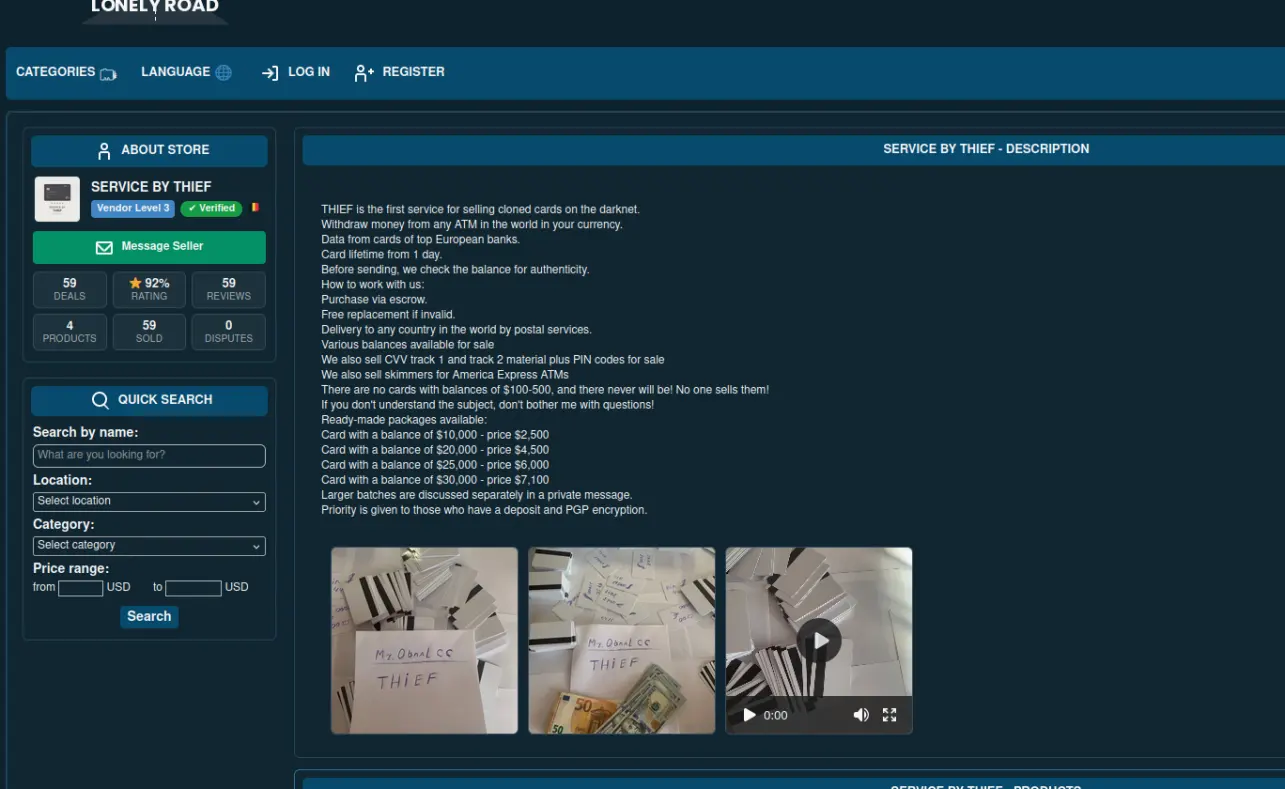
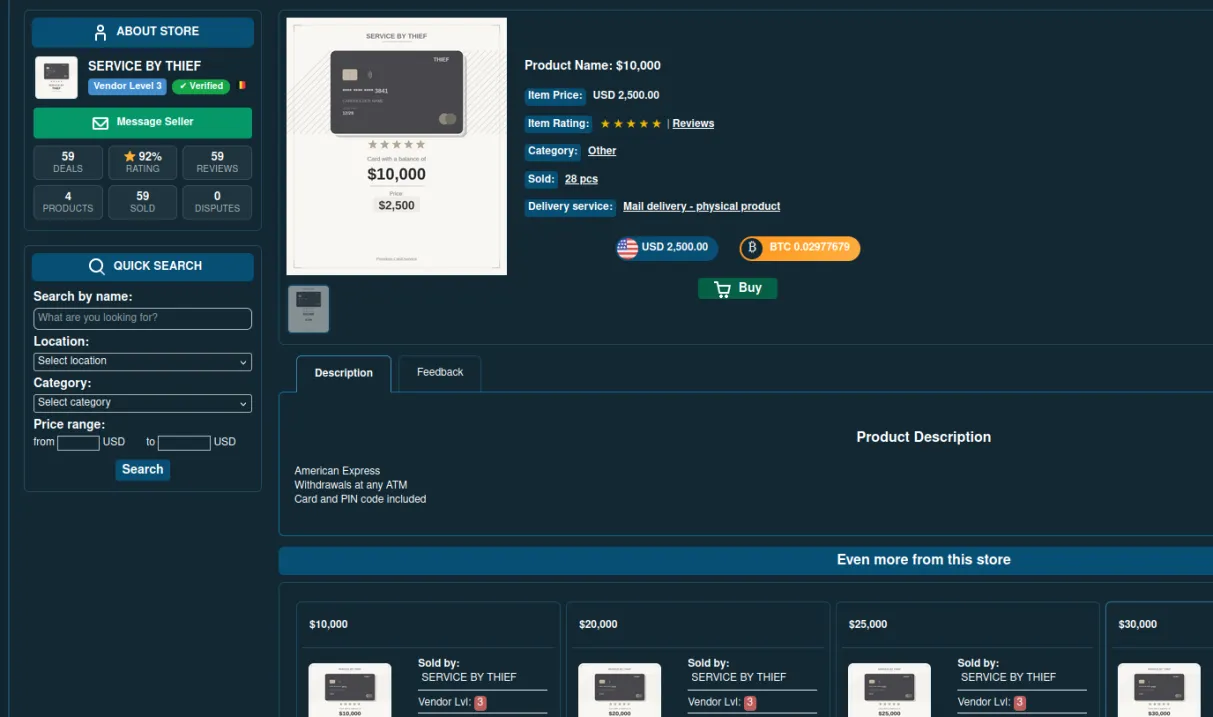
Mark T., a 34-year-old from Tampa Bay, Florida, sought financial gain through illegal means. In November 2024, he acquired a set of six cloned debit cards, complete with PINs, on a darknet marketplace for $480 in cryptocurrency. These cards, containing the stolen magnetic data of real accounts, enabled him to withdraw a total of $4,200 from three ATMs before he was apprehended at a fourth ATM, marking the end of his brief criminal endeavor.
1. Understanding Carding
Carding refers to the process of using stolen banking information for illicit transactions. Mark's actions fall within a well-established method involving the acquisition of stolen data, which typically follows several steps. Firstly, criminals employ skimming devices or data breaches to collect magnetic card tracks. This can occur through physical skimmers on ATMs, phishing attempts, or purchasing data from darknet platforms.
Secondly, the stolen information is embossed onto blank plastic, mimicking a legitimate card by including the necessary details such as the cardholder's name and expiration date. If a PIN is also compromised, often through hidden cameras or overlay keypads, the buyer is equipped to withdraw cash directly from ATMs. Following the cash-out phase, the proceeds are typically laundered into cryptocurrencies using various methods like Bitcoin ATMs or peer-to-peer exchanges, obscuring the financial trail. Mark successfully navigated these steps initially, but several critical oversights ultimately led to his capture.
2. The Role of ATMs in Surveillance
Modern ATMs serve not only as cash dispensers but also as sophisticated surveillance systems, equipped with numerous security features aimed at deterring or capturing criminal activity. For instance, most ATMs possess built-in cameras that capture high-resolution video of users, often enhanced with infrared capabilities for low-light situations. Additionally, many ATMs include hidden cameras positioned at strategic angles that are not easily visible to users.
Each transaction is meticulously logged, recording details such as the exact time of withdrawal, the amount dispensed, the card number used, and the specific ATM location. This geolocation data is invaluable for tracking illicit activities. When Mark approached the fourth ATM in a suburban area, he unwittingly exposed himself to the surveillance system, which recorded his face clearly as he withdrew $700, leaving behind a critical piece of evidence.
3. Investigation Timeline
The investigation into Mark's activities unfolded rapidly, beginning on Day 1 when three victims from Florida, Georgia, and North Carolina reported unauthorized withdrawals from their accounts. Their banks responded by blocking the cards and sharing the relevant information with a fraud alert system. By Day 3, automated algorithms within the bank's anti-fraud system identified a troubling pattern: multiple withdrawals from the same group of cloned cards occurring within a short timeframe across various states, triggering an emergency flag.
By Day 5, the case had escalated to the U.S. Secret Service (USSS), which holds jurisdiction over financial crimes. The agency promptly requested transaction logs and video footage from all involved ATMs. On Day 8, investigators examined the footage from the fourth ATM, capturing a clear image of Mark's face. A comparison with the state Department of Public Safety's driver's license database yielded a match, establishing Mark's identity without prior criminal records. Further analysis of withdrawal locations revealed a concentration within a 40-mile radius of his home.
4. Diligent Collection of Evidence
The investigation continued to gather evidence from various digital sources. On Day 12, a search warrant was issued to obtain electronic records such as Mark's browser history and ISP logs. Investigators discovered that Mark had visited Tor exit nodes corresponding with the timing of his card purchases, highlighting his use of the dark web. Through a court order directed at the cryptocurrency exchange where he purchased Monero, authorities connected his identity to the purchase of the cryptocurrency used in the illicit transaction.
By Day 14, investigators executed a search warrant at Mark's residence, seizing a significant cache of evidence including six blank plastic cards, a magnetic stripe read/write device, a laptop with traces of dark web activity, and a substantial amount of cash totaling $3,200. The cash amount coincided with the denominations withdrawn from the ATMs, establishing a direct link to his criminal actions.
5. Mark's Arrest and Confession
On Day 15, Mark was arrested, and during questioning, he confessed to purchasing the cloned cards and successfully cashing out four of them. Notably, the remaining two cards had become inactive due to bank intervention before he could use them. The cumulative evidence collected by law enforcement was strong, with video footage, transaction logs, physical evidence from the search, and his confession all leading to a clear case against him.
6. Key Statistics of the Case
Several key figures encapsulate the financial and judicial outcomes of Mark's actions. Over the course of his illegal activities, he completed four withdrawals, totalling $4,900. In exchange for the cloned cards, he expended $480. The timeline from the initial withdrawals to his arrest spanned just 15 days. Ultimately, Mark faced a federal prison sentence of five years along with a financial penalty that included a $22,000 fine and restitution to the victims, followed by three years of supervised release.
7. The Myth of Cryptocurrency Anonymity
Despite Mark's choice to pay for the cloned cards using Monero — a cryptocurrency marketed for its privacy features — law enforcement was able to trace the transactions back to him. The critical flaw lay in the method used to acquire the Monero. Mark purchased the cryptocurrency via a centralized exchange where he completed Know Your Customer (KYC) verification, inadvertently linking his identity to the transaction. Under a court order, the exchange provided his personal information and transaction history, which served as key evidence against him.
Additionally, the timing of events was crucial. Mark's acquisition of Monero, his purchase on the dark web, the receipt of the cloned cards, and the subsequent ATM withdrawals all transpired within a narrow timeframe, reinforcing the circumstantial evidence against him. The physical evidence discovered during the search included the cloned cards, which matched the stolen data from victims — an irrefutable link to his criminal activity.
8. Exposing Criminal Mistakes
Mark’s case offers several lessons regarding criminal behaviour and the importance of security measures against fraud. Firstly, his withdrawals were concentrated within a small geographic area, raising immediate red flags for anti-fraud systems. Secondly, his lack of disguise at the ATM left him vulnerable to facial recognition, facilitating his identification.
Moreover, using a centralized exchange for buying Monero was a significant oversight, as KYC processes tied his identity to his cryptocurrency transactions. His home contained evidence directly linking him to the crime, including the cloned cards, magnetic stripe device, and a laptop with relevant history. Additionally, keeping a large sum of cash in his residence, which matched ATM withdrawals, provided further incriminating evidence. Finally, the rapid succession of his actions allowed authorities to connect the dots quickly, although even a slower approach would not have concealed his identity from the ATM cameras.
9. Insights for Security Professionals
This case serves as a reminder of the effectiveness of security systems and the weaknesses criminals often overlook. Fraud detection algorithms employed by banks are an essential line of defence, automatically identifying suspicious activity through pattern recognition and geolocation data, well before human intervention is necessary. Continuous investment in machine learning models for anomaly detection is vital for enhancing these systems.
Furthermore, the integration of digital and physical forensic evidence is crucial in investigations. In Mark's case, the ATM video, combined with the transaction logs, formed a robust basis for establishing his guilt. Although cryptocurrencies are often perceived as anonymous, the interplay between entry points — such as KYC exchanges — and withdrawal methods connects the digital and physical realms, underscoring the need for vigilance in security practices.
10. The Final Judgement
In March 2025, Mark T. pleaded guilty to charges related to fraud and money laundering under relevant U.S. statutes. The U.S. District Court for the Middle District of Florida sentenced him to five years in federal prison, followed by a three-year supervised release. He was also ordered to pay a fine of $22,000 and provide restitution to the three victims affected by his actions.
During sentencing, the judge acknowledged that while Mark was not the orchestrator of the criminal scheme, he represented the final link in the chain of fraud. Despite this, it is often individuals like Mark, who engage directly with the victims, who face the most severe repercussions. Higher-level organisers typically remain hidden, presenting ongoing challenges for law enforcement agencies.
Reflections on the Case
Mark's miscalculations highlight the intricate interplay between digital actions and their physical repercussions. The case underscores the efficacy of modern surveillance and fraud detection techniques, serving as a cautionary tale for potential offenders. It illustrates that the supposed anonymity of the dark web and cryptocurrencies can be easily compromised by investigative diligence and the inherent vulnerabilities in human behaviour.
For additional information on activities related to the dark web, visit our resource on dark web fraud prevention.
Common questions
What is carding?
Carding is the practice of using stolen banking information to conduct fraudulent transactions, often involving the creation of cloned cards.
How can individuals protect against credit card skimming?
To protect against credit card skimming, one should regularly check bank statements for unauthorized transactions and use credit card skimming device detectors when using ATMs.
What are the legal consequences of carding?
Legal consequences of carding can include severe penalties such as lengthy prison sentences, substantial fines, and restitution payments to victims.
What role does cryptocurrency play in carding schemes?
Cryptocurrency is often used in carding schemes to obscure the financial trail, but purchases made through centralized exchanges can link identities to transactions.
Related resources
These services are useful starting points for further research. Onion directory.
 Tor Browser Wiki: Comprehensive Resource for UsersExplore the Tor Browser Wiki for in-depth information on Tor, its features, and how it enhances online anonymity and security.
 The Onion Dark Web Browser: Features and UsageExplore the features and usage of the Onion dark web browser to navigate the Tor network safely and access hidden content.
 Dark Web Hidden Wiki Reddit: Community InsightsExplore insights from the Dark Web Hidden Wiki Reddit community, uncovering valuable resources and discussions about navigating the dark we…
 Tor Browser Links Telegram: Accessing Channels SafelyDiscover how to safely access Telegram channels using Tor Browser links, ensuring your privacy and security while navigating the dark web.